

Traditional economic systems have long followed a linear model (take, make, and dispose), which leads to resource depletion, excessive waste and increased environmental impact.
The circular economy challenges this model by redesigning how resources are used, ensuring materials remain in circulation for as long as possible while minimizing waste. For businesses, this shift is not only about environmental responsibility but also about improving efficiency, reducing risks and unlocking new opportunities for innovation and growth.
A circular economy is an economic system focused on keeping products, materials and resources in continuous use through reuse, repair, refurbishment, remanufacturing and recycling. Instead of treating waste as an inevitable outcome of production, circular models view waste as a valuable input for new processes. The goal is to creating a closed-loop system where resources circulate rather than being discarded.
Organizations can adopt several strategies to transition toward circular operations:
To better understand how circular economy principles work in practice, consider a recycling value chain:
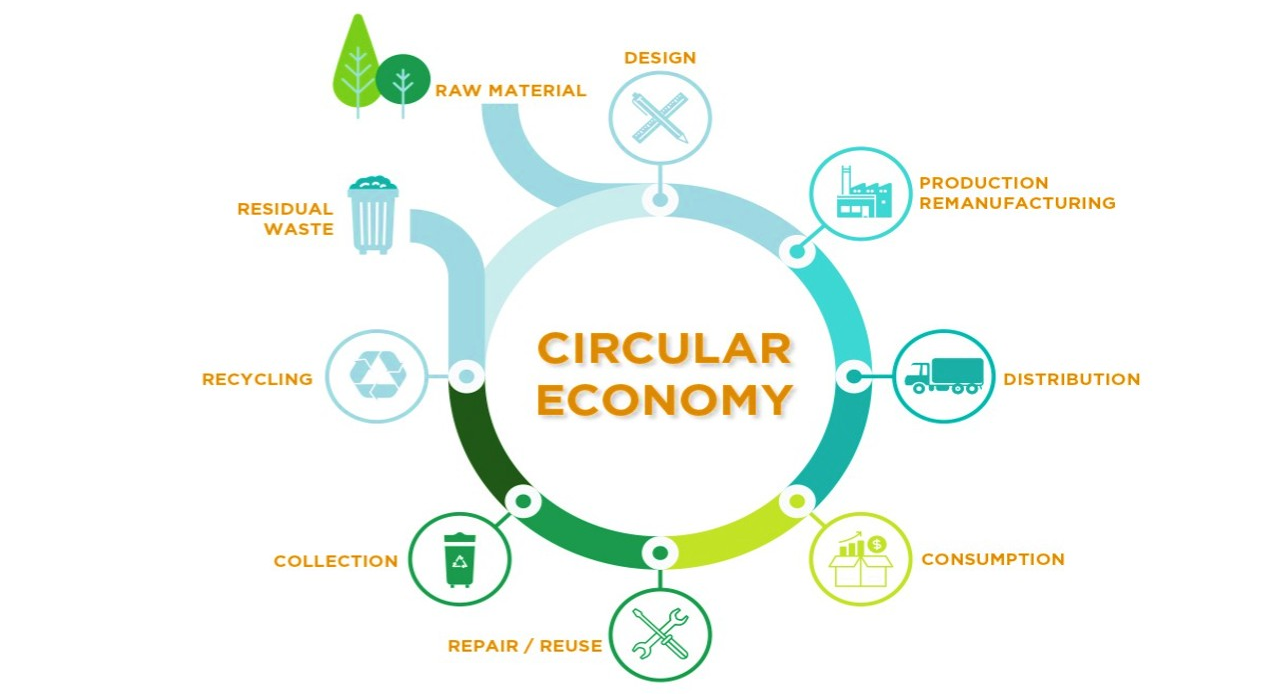
This closed-loop approach minimizes waste, reduces environmental impact and creates economic value by extending the lifecycle of materials.
Governments across Asia and the Middle East are increasingly promoting circular economy practices through strong policy frameworks, regulations and incentives. In India, initiatives such as the E-Waste Management Rules, Plastic Waste Management Rules and Extended Producer Responsibility (EPR) frameworks are driving responsible waste management and material recovery. Malaysia is advancing circularity through its Roadmap Towards Zero Single-Use Plastics and national recycling programs, encouraging industry participation through policy support. Singapore’s Zero Waste Masterplan focuses on minimizing landfill use and maximizing resource efficiency, supported by structured EPR schemes for e-waste. Similarly, countries in the Middle East, particularly the UAE and Saudi Arabia, are embedding circular economy principles into national strategies such as the UAE Circular Economy Policy 2021–2031 and Saudi Vision 2030.
Implementing circular economy strategies requires data visibility, measurement and continuous monitoring across operations and supply chains. Without the right tools, organizations often struggle to track material flows, evaluate environmental impacts and measure progress toward sustainability targets.
ARRO by CeroED enable organizations to integrate sustainability data, monitor environmental performance and identify opportunities for circular improvements.
Through data integration and AI-driven insights, organizations can:
By digitizing sustainability management, businesses can transform circular economy initiatives from isolated projects into measurable, scalable strategies.
Want to know how ARRO operates?
Email us at info@ceroed.com
Visit www.ceroed.com
#CircularEconomy #ESG #CeroED #ARRO #Sustainability #SupplyChain #ESGRisk