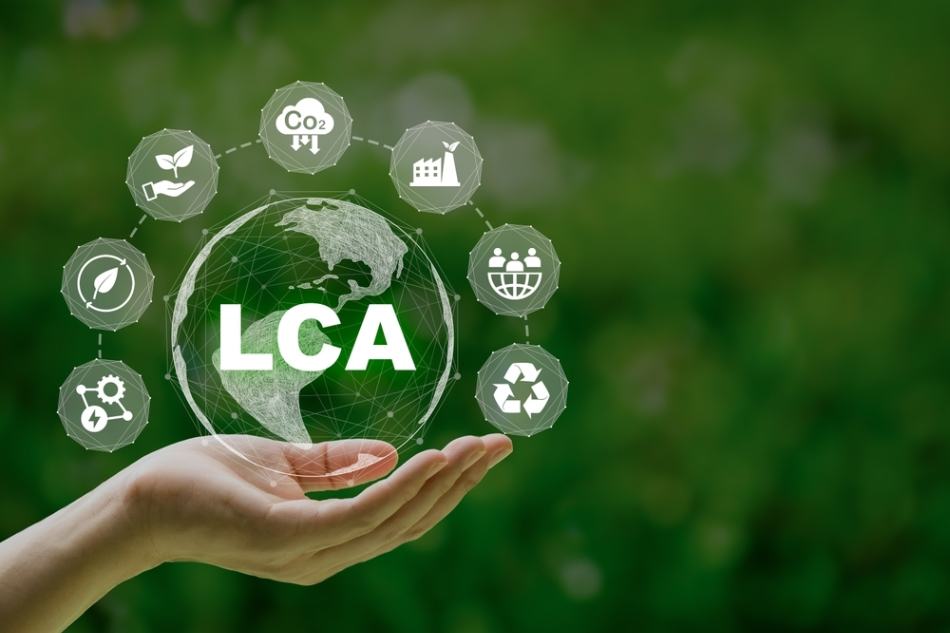
Imagine you buy a product, say a T-shirt, a smartphone, or a piece of furniture. But before you see the final item, many things happen behind the scenes: raw materials are extracted, materials are processed, products are manufactured, shipped, used, and eventually thrown away or recycled. LCA is a method that tries to answer a simple but powerful question: “What is the environmental impact of this product – from cradle to grave?”
In other words, LCA does not only look at one moment of the product’s life (like manufacturing), it looks at all stages: raw material extraction, production, transport, usage, waste or recycling.
Because LCA considers the full life cycle, it helps avoid misleading choices. For example, a “green” material might seem good at first, but once you account for transport, energy use or disposal, it might be worse overall than alternatives.
Why LCA matters
- Understand the full impact:LCA helps you map how much energy, resources, emissions, or waste a product causes over its life. This gives you a holistic picture, not just one slice.
- Compare alternatives fairly:If you must choose between two materials, two manufacturing methods or two suppliers – LCA lets you compare their environmental footprints objectively
- Spot “hotspots” to improve:By breaking down impact by stage (raw-material, manufacturing, transport, use, disposal), you can see which phase contributes most and target reductions there (for example, more efficient manufacturing, cleaner energy, recyclable materials, better transport choices)
- Support sustainable design and innovation:For product developers or designers, LCA helps design products from the start with lower environmental impact.
- Build transparency and trust:Through LCA-based assessments, companies can support their sustainability claims with data, useful for regulators, customers and investors.
How LCA is Done – the Basic Steps
LCA is typically structured according to four main phases.
- Goal & Scope Definition
- Decide why you’re doing the LCA and what exactly you want to assess (which product, which life-cycle stages, which functional unit)
- Set system boundaries (what to include, e.g., raw materials, transport, disposal).
2.Life Cycle Inventory (LCI)
- Collect data: how much material, energy, water is used, how much emissions, waste or other environmental releases happen at each stage.
3.Life Cycle Impact Assessment (LCIA)
- Translate inventory data into measures of environmental impact:for example ,greenhouse-gas emissions(carbon footprint),resource depletion,water use,pollution potential,toxicity, etc.
4.Interpretation
- Analyse results in light of goals and scope.Identify major impact contributors (“hotspots”),evaluate uncertainties or data limitations.Use findings to make decisions or recommendations (choose materials,redesign production,adjust supply chain,etc.).
Depending on the scope, LCA can be full “cradle-to-grave” (raw materials to disposal) or limited to only some phases, like “cradle-to-gate” (up to factory output).
Limitations & Challenges of LCA
- Data-intensive and complex:To be accurate, you need detailed data on every phase. For many products or supply chains, getting all this data is hard.
- Variability and assumptions:Because boundaries, data quality, and assumptions (e.g. lifespan, recycling rate) influence results, two LCAs on the same product may give different outcomes if done differently.
- Often limited to environmental aspects:Standard LCA usually measures ecological and resource impacts, it rarely covers social aspects (working conditions, communities, social equity) or full economic costs.
- Not always easy to communicate:The results can be complex and technical, making them hard to explain to non-experts or consumers.
Who Uses LCA, and Why It’s Useful for Businesses
LCA is not just for scientists or environmentalists, many parts of a company benefit:
- Product development / R&D: to design or select more sustainable materials and processes.
- Supply-chain & procurement: to choose suppliers or materials with lower environmental footprint, considering full life-cycle impacts.
- Marketing & brand sustainability: to support credible sustainability claims using data (rather than vague “eco-friendly” labels).
Researchers and policy-makers also use LCA to evaluate and compare broad sustainability strategies, circular economy options, regulatory impacts, and lifecycle effects across industries.
How ARRO Could Support LCA
- Automated emissions tracking:ARRO is described as a platform for tracking an organisation’s carbon emissions (Scope 1, 2, and 3) across operations and supply chains. That visibility into carbon hotspots and supply-chain emissions is a core input for LCA, especially when doing inventory (LCI) and footprint calculations.
- Data management & transparency:ARRO provides data collection, validation, approval flow and status tracking. In LCA, data quality and traceability are crucial.
- Real-time or periodic monitoring instead of static snapshots:Traditional LCAs can be static, based on data at one point in time. ARRO’s automated & ongoing emissions tracking can allow organizations to monitor changes over time (e.g. as supply chains change, as new processes are adopted), enabling dynamic or updated LCA rather than one-off.
- Support for net-zero / carbon-neutral strategies:Through emissions tracking, analytics, and possibly offset management, ARRO helps organizations plan and measure progress toward carbon-neutrality or net-zero goals.
- Facilitating regulatory compliance and reporting:As environmental regulations tighten and demand for transparent ESG (environmental, social, governance) reporting grows, ARRO can help companies build credible, consistent, and auditable emissions data.
ARRO can act as an enabling tool, streamlining data collection, increasing transparency, offering ongoing emissions monitoring, and helping embed LCA-friendly data practices into an organization’s operations.
Want to know more?
Contact us at info@ceroed.com
Visit www.ceroed.com
#Blockchain #Transparency #CeroED #ARRO # Sustainability # ESG